Building the Podnews Weekly Report 2025: What AI Taught Me About Podcasting’s Hidden Opportunities

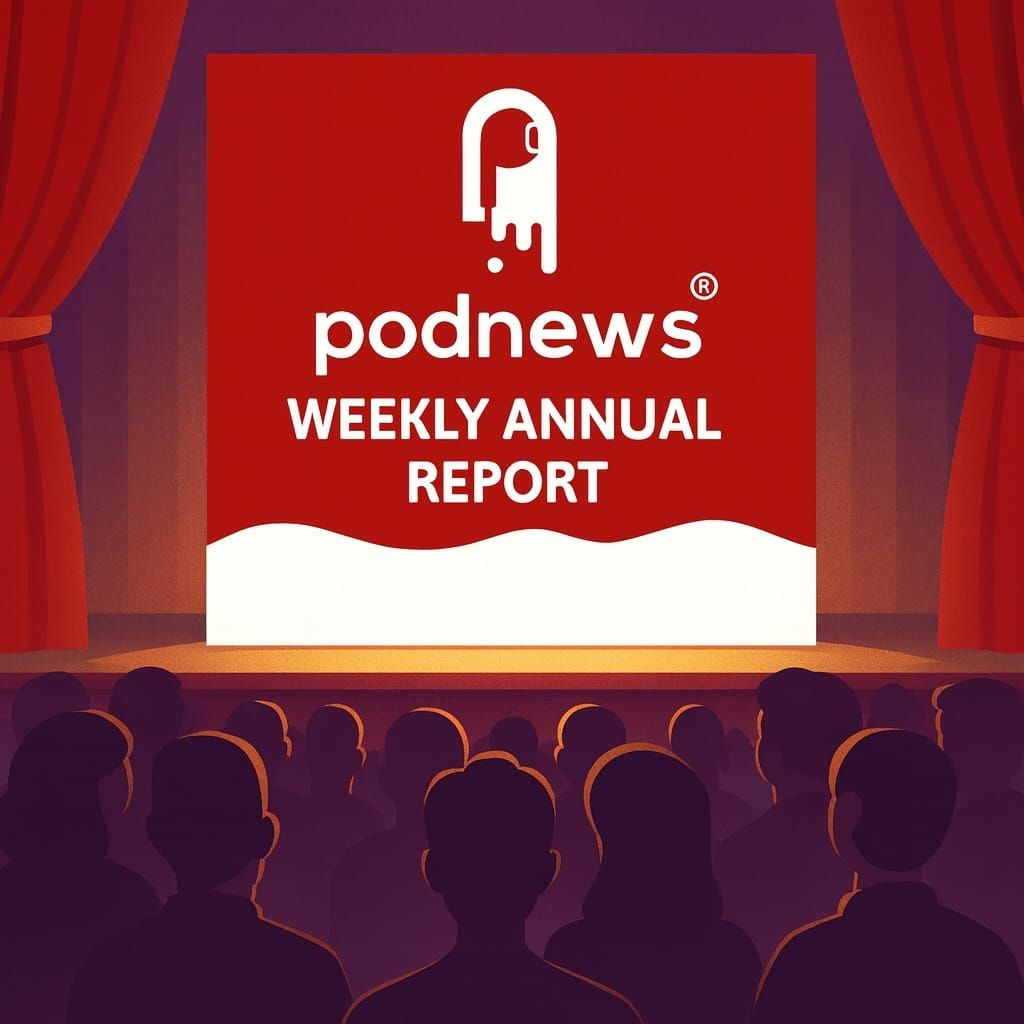
Every year I like to run a fun, slightly nerdy experiment using AI to analyze something happening in the podcast world.
This time, I decided to break down a full year of Podnews Weekly episodes and turn them into an interactive research dashboard. It is called the Podnews Weekly Report 2025.
This project is not endorsed by Podnews, Podnews Weekly, James Cridland, or the great Sam Sethi.
Everything inside the report was generated and researched with the help of AI. I used Claude Code to build local Python scripts, spaCy NER for entity recognition, Python 3, Chart.js, Tailwind CSS, and a lightweight Worker-based setup for hosting references. All data originates from the transcripts included in the Podnews Weekly RSS feed, and I have cited everything back to the original source. This is not definitive research. It is an AI-assisted exploration.
With that out of the way, let us talk about what this project really shows. Because this experiment is not just about Podnews Weekly. It is about what AI and open podcasting standards unlock for creators.
AI Opens New Doors for Podcasters
The biggest takeaway from building this report is that AI does not need to power massive web apps or change how listeners consume podcasts. Sometimes the most valuable use case is much smaller. A micro app. A lightweight tool. Something that enhances how audiences interact with your content.
That is what this report is. It is not a listening experience. It is an interactive way to explore a year’s worth of conversations. A visual snapshot of the topics, people, and companies that shaped Podnews Weekly throughout the year. And it did not require a huge tech stack. It required:
- Python 3
- spaCy for NER
- Chart.js
- Tailwind CSS
- Claude Code to assist in writing and structuring the logic
- A willingness to experiment with data I already had
This is a great example of what podcasters can build today. You do not need to launch a full SaaS product. You can create small tools that make your show more dynamic, more engaging, and more useful.
By the way, you can get the source code on Github.
Your Episode Archive Is More Valuable Than You Think
Podcasters move fast. You record, publish, promote, and get ready for the next episode. But when you zoom out and look at the totality of your work—especially with transcripts—your archive turns into something much more valuable.
Your content becomes a dataset.
Your conversations become analyzable.
Your show becomes a research resource.
For this project, I analyzed roughly 57 episodes. Once laid out in charts and trend lines, it became obvious how much depth lives inside a consistent publishing habit. This matters even more in today’s AI-centric world. Tech companies ingest written and video content to power their models. They do the same with podcasts.
So the question becomes:
Why shouldn’t podcasters also benefit from their own data?
This is where open standards matter. RSS matters. Independence matters. If your feed is portable, your data is portable. When your data is portable, you can build your own tools and your own experiences on top of it. Dashboards, research apps, companion tools, community features. It all becomes possible.
Podcasting 2.0 Makes This Even Better
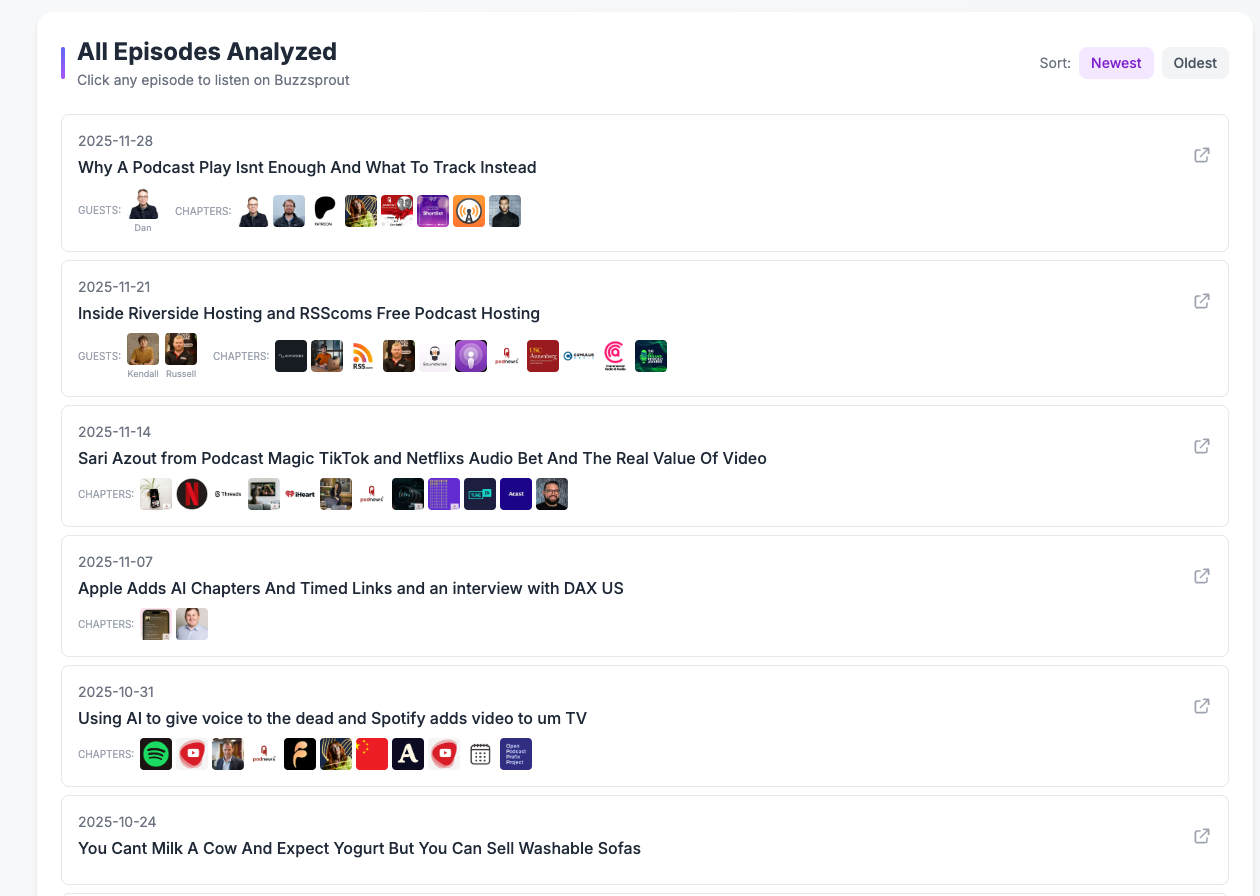
Podcasting 2.0 dramatically improves what creators can build because of its structured tags. Transcripts, people, funding, chapters, location, and more are available in the RSS feed itself.
Podnews Weekly uses Buzzsprout, which supports the transcript tag. That meant I did not need to transcribe anything. A small Python script could fetch every transcript, and spaCy handled the entity extraction.
Because of that, the dashboard can display:
- Guest photos via the person tag
- Chapters from the chapter tag
- Keyword frequency over time
- Episode-level summaries and visual cues
If I wanted to extend this further, I could add modal popouts, embedded players, interactive timelines, and more. And I would not need to reverse-engineer anything. The data already lives inside the RSS feed.
This is what makes Podcasting 2.0 so compelling. It opens the door to richer experiences that do not rely on proprietary podcast apps.
Why This Report is Important
The dashboard allows anyone in the podcast industry to step back and see a larger narrative. You can compare how often certain companies, topics, or people appear across the year. You can see when certain themes spike. It becomes a simple, visual way to trace trends and understand how industry conversations evolve over time.
For analysts, creators, or platform builders, this context can be valuable. It highlights the shifting focus of the podcast ecosystem.
A Searchable, Structured Archive
Because the report indexes every transcript, you can search across the entire year of episodes from a single place. If you want to know when a technology, platform, or trend was mentioned, the Transcript Search feature makes that easy.
Clicking into any episode brings you deeper into the source material. The result is a condensed research archive that saves you time and makes it easier to study conversations that might otherwise blend together.
Context for Strategy, Development, and Analysis
If you are building podcast tools, advising clients, buying ads, or producing shows, this type of data can help you understand the broader landscape. You can see rising interest in things like video podcasting or programmatic ads. You can identify when certain companies show up repeatedly and when they fade out.
None of this replaces traditional research. But it gives you directional clarity, which often matters just as much when you are making strategic decisions.
A Resource for Anyone Deeply Invested in Podcasting
For people who follow the podcast industry closely, this dashboard offers a way to browse, compare, and revisit a year’s worth of insights from Podnews Weekly. It is a lightweight, fast, easy-to-digest way to stay informed.
And because it is built on open standards and your own content, it reinforces a larger point about the value of accessible podcast data.
Final Thought
This experiment is about showing what is possible when podcasters take ownership of their content and look for ways to extend the experience beyond audio.
As we close out the year, I hope this inspires you to experiment with your archive and build something interesting with your own content. Your episodes contain more value than you think.
If you explore the report, let me know what stands out. And stay tuned for more experiments at The Podcast Setup!